
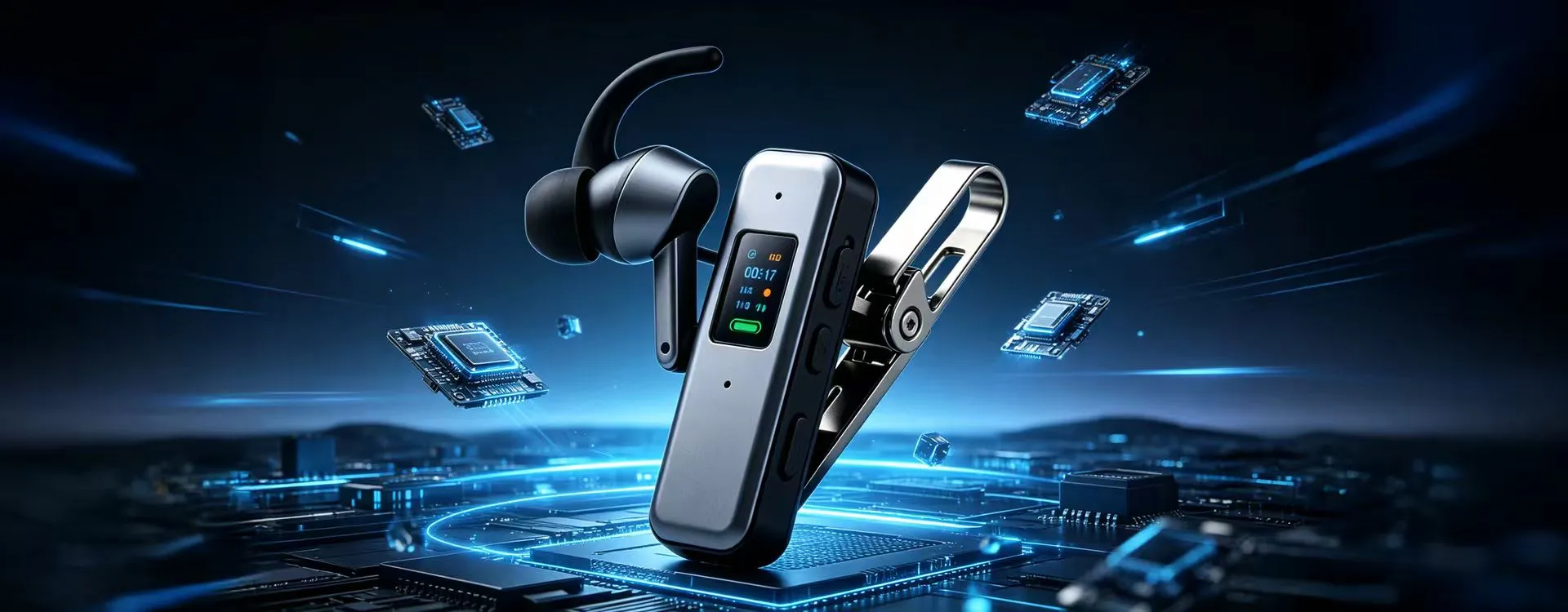
What Is a Live Streaming and KTV Headset PCBA?
A live streaming and KTV headset PCBA is the board that carries microphone pick-up, in-ear monitoring and effects processing inside a headset built for streaming, karaoke and short-video recording. It has to close the loop between the performer and their own ears in near real time: the singer hears themselves with reverb and accompaniment while the audience hears a finished mix. The board handles staged microphone gain, DSP reverb and de-essing, monitoring latency management, and the wired, Type-C or wireless link to the phone, sound card or mixing desk.
Typical Specifications
| Parameter | Typical configuration |
|---|---|
| Monitoring latency | Millisecond range, measured on the final acoustic path |
| Microphone | High-sensitivity condenser or MEMS with staged gain and controlled noise floor |
| Effects | Reverb, pitch shift, de-essing, compressor, voice change |
| Interfaces | 3.5 mm analog, USB Type-C digital, Bluetooth, 2.4 GHz |
| Sample rate | 44.1 kHz / 48 kHz |
| Power supply | Li-ion with USB-C charging |
| Certification support | RED, FCC, CE |
The values above are the configuration ranges we build to. The final specification is fixed with the customer at project kick-off and verified on the production enclosure.
Typical Applications
- Mobile live streaming — vocal monitoring and effects while streaming from a phone.
- Home and commercial karaoke — microphone reverb, pitch correction and music ducking.
- Short-video recording and dubbing — clean vocal capture with on-board monitoring.
- Voice rooms and social audio — low-latency monitoring with voice effects.
- Online teaching and podcasting — intelligible speech with sidetone for speaker confidence.
Core Technologies
- Low-latency in-ear monitoring — buffer strategy and processing order are chosen against an end-to-end latency budget.
- Staged microphone gain — gain is distributed across the analogue and digital stages so high sensitivity does not bring hiss with it.
- DSP effects chain — reverb, pitch shift, compressor and de-essing run in firmware and are tunable per product.
- Sibilance control — de-essing keeps high-gain vocals from sounding harsh on bright material.
- Type-C digital audio — digital host interface avoids the analogue link budget of a 3.5 mm connection.
Customisation and OEM / ODM Process
- Requirement review — application, acoustic targets, interface list and target cost are fixed in writing.
- Chip selection and schematic — platform options are compared on performance, supply risk and BOM cost.
- PCB layout and DFM — RF, audio and power domains are partitioned for clean grounding and EMC headroom.
- Prototype and acoustic tuning — DSP parameters are tuned on the real enclosure, not on a generic bench.
- Certification support — RED, FCC and CE test plans are prepared and pre-scanned before formal submission.
- Mass production — 8 fully automatic lines handle SMT, testing, ageing and packing with full traceability.
Frequently Asked Questions
How low does monitoring latency need to be for karaoke?
Singers start to notice monitoring delay well before listeners do. We work to a millisecond-range budget measured end to end, from microphone to ear, because a figure quoted for the DSP alone hides the real contribution of the buffer and the wireless link.
Can reverb and voice effects be tuned per product?
Yes. Reverb time, pre-delay, wet/dry balance and voice-change presets are firmware parameters, so the same board can carry different voicings for different markets or models.
Does Type-C digital audio work with both Android and iOS?
We support the USB audio class path used by current Android devices and the digital audio path required for iOS, and confirm the combination on the target handsets during the prototype stage.
How do you avoid hiss with a high-sensitivity microphone?
By distributing gain across stages instead of concentrating it, keeping the first stage close to the capsule, and controlling the noise floor in layout. The result is verified with a noise measurement on the final build rather than estimated from the datasheet.
Can the same board serve wired and wireless SKUs?
Yes. Where the wired and wireless versions share acoustics, we keep one base design and populate the interface stage differently, which shortens qualification and keeps tuning work shared.