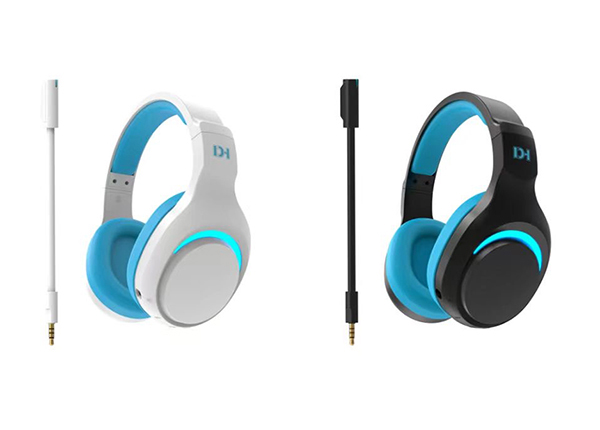
What Is a Gaming Headset PCBA?
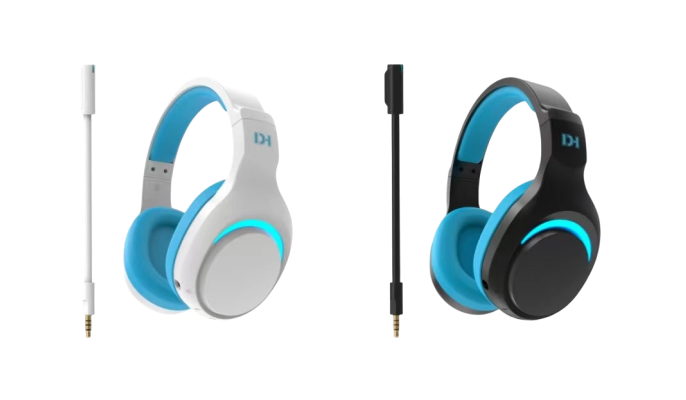
A gaming headset PCBA is the main board of a gaming headset, built around latency first. It carries the 2.4 GHz or Bluetooth wireless link, the microphone path with ENC, headphone amplification and the user controls. In competitive play the gap between an on-screen event and its audio cue is what matters, so the wireless protocol and the buffer strategy are selected against an end-to-end latency budget rather than against a headline figure. Liwei 2327 series gaming headset platforms are built on this approach, combining a 2.4 GHz and Bluetooth dual-mode link with ENC and ANC options on one board.
Typical Specifications
| Parameter | Typical configuration |
|---|
| Wireless | 2.4 GHz low-latency link with Bluetooth dual-mode |
| Latency approach | Tuned to a product latency budget, with 2.4 GHz as the low-latency path |
| Microphone | ENC uplink noise suppression, optional detachable boom |
| Audio features | Virtual surround, EQ presets, microphone monitoring and sidetone |
| Interfaces | USB dongle, USB-C, Bluetooth, 3.5 mm fallback |
| Power supply | Li-ion with USB-C charging and play-and-charge support |
| Platform support | PC, console and mobile |
| Certification support | RED, FCC, CE |
The values above are the configuration ranges we build to. The final specification is fixed with the customer at project kick-off and verified on the production enclosure.
Typical Applications
- PC and console gaming — 2.4 GHz link for latency with console compatibility retained.
- Esports and competitive play — where the audio cue arrives before the visual confirmation.
- Mobile gaming — Bluetooth and USB-C paths for handheld play.
- Streaming and game chat — microphone quality and sidetone alongside game audio.
- Simulation and VR audio — positional cues with a tight latency budget.
Core Technologies
- 2.4 GHz plus Bluetooth dual-mode — one board serves a low-latency dongle path and a convenience Bluetooth path.
- Low-latency audio path — protocol selection, buffer depth and processing order are all set against the measured end-to-end budget.
- ENC microphone — team chat is cleaned on the transmit path so teammates hear the player, not the room.
- Virtual surround and sidetone — positional rendering plus microphone monitoring, so users do not shout.
- Platform compatibility — the USB and console paths are verified on the target hardware during prototype evaluation.
Customisation and OEM / ODM Process
- Requirement review — application, acoustic targets, interface list and target cost are fixed in writing.
- Chip selection and schematic — platform options are compared on performance, supply risk and BOM cost.
- PCB layout and DFM — RF, audio and power domains are partitioned for clean grounding and EMC headroom.
- Prototype and acoustic tuning — DSP parameters are tuned on the real enclosure, not on a generic bench.
- Certification support — RED, FCC and CE test plans are prepared and pre-scanned before formal submission.
- Mass production — 8 fully automatic lines handle SMT, testing, ageing and packing with full traceability.
Frequently Asked Questions
Why is 2.4 GHz used instead of Bluetooth for competitive play?
A proprietary 2.4 GHz link with a dedicated dongle keeps the audio path short and predictable, so latency stays low and stable. Bluetooth is carried alongside it for convenience and mobile use, where latency matters less than compatibility.
Can the headset run both 2.4 GHz and Bluetooth at once?
Yes. A common configuration is game audio on the 2.4 GHz link and a phone call or chat on Bluetooth, with mixing and priority handled on the board.
How is end-to-end latency measured?
From the audio source to the acoustic output at the ear, on the final build. We quote the end-to-end figure, because a codec or radio number alone does not tell the player what they will experience.
Can we tune the microphone for team chat?
Yes. ENC parameters and the boom geometry are tuned together on the customer mechanical design, and verified with recorded passes in a noisy room.
Do you support console compatibility?
Yes. The USB audio path and any console-specific requirements are settled at the requirement stage and verified on the target hardware before tooling is released.